Concept 4 of 11
Industrial Robots
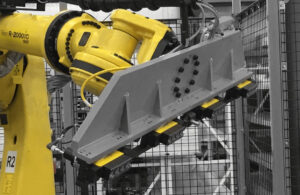
The industrial robot on this page is built around a magnetic gripper. The arm lifts a steel plate that a claw would struggle to hold flat. That one feature changes the job. Sheet, stampings, and weldments move without a custom finger for every outline.
Match the gripper to the part
Weight, thickness, and a flat face decide the magnet. A painted stack or a curved stamping may need a different face on the same arm. Write the part down before you buy the tool.
Lay out the cell
The magnet picks from a rack and sets the plate in a fixture. A camera can confirm the plate is seated before the magnet lets go. Keep people out from under the load while the arm is moving.
Test with the real steel
Program the path, then run the plates the plant actually makes. Watch for parts that stay stuck to the magnet and for plates that shift when the arm speeds up. Adjust the release and the speed until the fixture fills the same way every cycle.
Train the crew to inspect the magnet face and to clear a jam from the side of the cell. When that station is steady, the same arm can take a welding torch or a mechanical gripper for the next job. An industrial robot is the tool on the end, matched to the material.