Concept 11 of 11
Robotic Warehouse For Materials
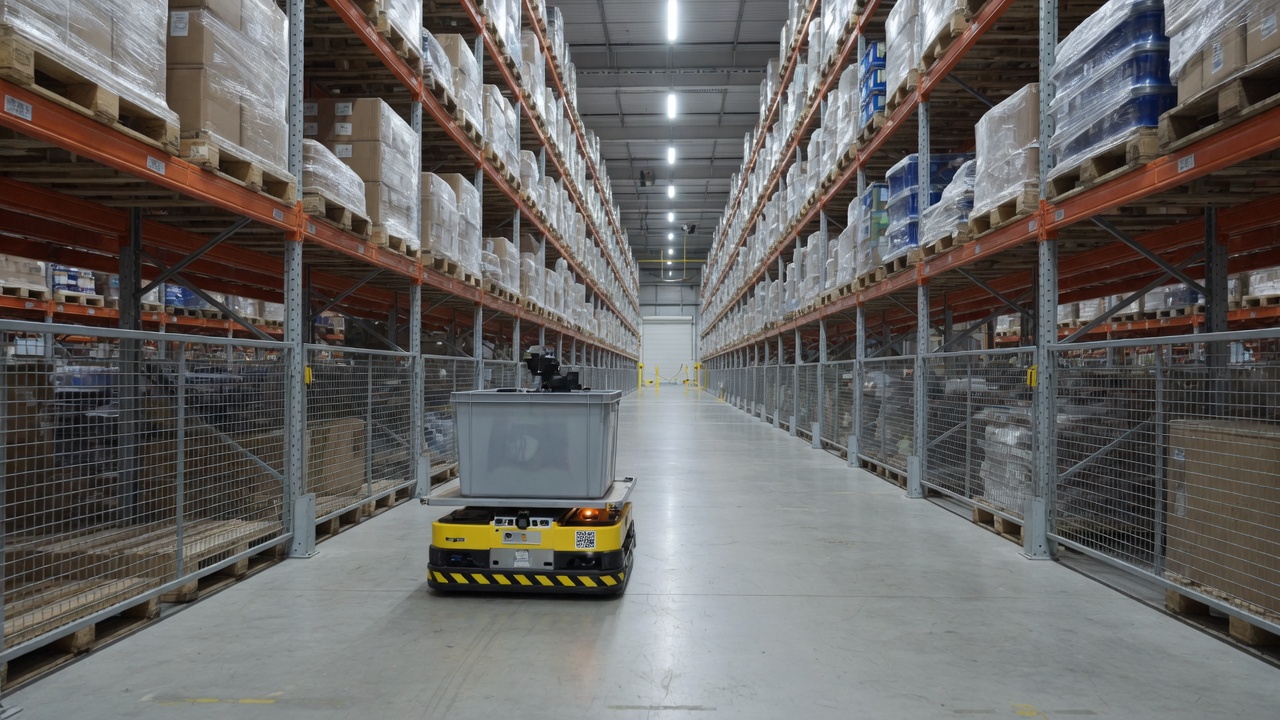
Robots and automation technologies can perform repetitive tasks quickly and accurately, resulting in increased throughput and productivity. They can also work around the clock, allowing warehouses to operate continuously without the need for breaks or shift changes. The feature in this aisle is a mobile robot with one tote. It does the travel. People still decide the order.
Analysis and planning
This involves analyzing the existing warehouse operations, identifying areas that could benefit from automation, and developing a plan for incorporating robotics into the warehouse.
System design of automation
The next step is to design the robotic systems that will be used in the warehouse, including automated storage and retrieval systems, conveyor belts, robotic arms, and other automation technologies. A tote robot is the piece that connects those zones. It leaves a pick face with a bin and meets a pack station at the other end of the aisle.
Design the flow
In this segment of the automation process equipment and parts are designed in the placement of each piece of equipment. This involves determining the layout of the line, the flow of materials and products, and the placement of each piece of equipment.
Robot integration
Once the systems have been designed, they need to be integrated into the existing warehouse operations. This may involve retrofitting the warehouse with new equipment or building a new facility from the ground up.
Testing and commissioning
After the equipment has been installed, it needs to be thoroughly tested to ensure that it functions as intended. This includes testing the software, hardware, and controls systems to ensure that they are all working properly.
Test and optimize the system
Once the system is built, you need to test and optimize it to ensure that it is working correctly and efficiently. This could involve running test loads of totes, monitoring the aisle, and making adjustments to the software and equipment as needed.
Training staff
Once the systems have been tested and commissioned, warehouse staff need to be trained on how to use and maintain the new equipment. This may involve training on software and control systems, as well as maintenance and repair procedures.
Benefits of an automated warehouse
Building an automated warehouse management system can be a challenging but rewarding endeavor. By automating repetitive tasks and streamlining warehouse operations, you can improve efficiency, reduce labor costs, and improve overall profitability. Additionally, designing and building an automated warehouse system can be an excellent opportunity to learn about robotics, automation, and supply chain management, which are valuable skills in today's fast-paced business environment. Furthermore, as businesses increasingly rely on e-commerce and just-in-time delivery, the demand for automated warehouse management systems is only likely to grow. So if you're interested in robotics, automation, and supply chain management, building an automated warehouse management system can be a great way to explore these fields and contribute to the future of logistics and warehousing.